Portable Fire Extinguishers: A Comprehensive Guide to Selection and Compliance in the UAE
Portable fire extinguishers are the first line of defense in fire safety management across residential, commercial, and industrial facilities in the UAE. With over two decades of civil defense experience, I have witnessed how proper extinguisher selection and placement significantly reduces fire incidents and minimizes property damage. This comprehensive guide will help facility managers, safety officers, and building owners understand the critical differences between extinguisher types and make informed purchasing decisions aligned with UAE fire safety regulations.
Understanding Portable Fire Extinguishers
A portable fire extinguisher is a handheld pressurized device designed to suppress small, incipient-stage fires before they spread uncontrollably. Unlike fixed suppression systems, portable extinguishers empower building occupants to take immediate action during the critical first moments of a fire. In the UAE, the Civil Defense Act and Dubai Municipality Fire and Life Safety Code mandate that all occupied buildings maintain accessible and properly maintained extinguishers based on occupancy type and fire load assessment.
Types and Variants of Fire Extinguishers
Water-Based Extinguishers (Type A) are effective for ordinary combustibles including wood, paper, textiles, and rubber. These extinguishers use pressurized water or water mist technology and are ideal for offices, schools, and storage facilities. Water-based units are cost-effective and environmentally friendly but unsuitable for electrical fires or flammable liquid storage areas.
Foam Extinguishers (Type B) contain aqueous film-forming foam (AFFF) or fluorine-free foam concentrate. These excel at suppressing flammable liquid fires by creating a blanket that prevents vapor release and reignition. Foam extinguishers are essential in warehouses, service stations, aircraft hangars, and manufacturing facilities handling petroleum products. Modern facilities increasingly transition to fluorine-free foam due to environmental concerns regarding per- and polyfluoroalkyl substances (PFAS).
Dry Powder Extinguishers (Type C) use monoammonium phosphate or sodium bicarbonate to interrupt the combustion chain reaction. These are versatile, handling electrical fires up to 1000V and flammable liquids. Multipurpose dry powder (ABC-rated) extinguishers are ubiquitous in commercial buildings, vehicle maintenance areas, and hospitality venues throughout the UAE. However, residue cleanup can be significant, and powder reduces visibility during use.
Carbon Dioxide Extinguishers (Type E) displace oxygen and cool the fire while leaving no residue. CO2 units are critical for server rooms, electrical equipment spaces, and sensitive document storage. The non-conductive nature makes them ideal for live electrical equipment. Care must be taken regarding operator safety, as horn temperatures drop to minus 79 degrees Celsius, risking frostbite.
Wet Chemical Extinguishers (Type K) are specifically designed for cooking oil fires, becoming increasingly necessary in UAE commercial kitchens, hotels, and food preparation facilities. The saponification reaction converts oil into soap and water, eliminating reignition risk. These extinguishers are now mandated in professional kitchen environments under stringent fire codes.
Critical Selection Criteria for UAE Facilities
Effective extinguisher selection requires comprehensive fire hazard assessment. First, identify all fire classes present: Class A (ordinary combustibles), Class B (flammable liquids), Class C (electrical equipment), and Class K (cooking oils). The occupancy type, storage materials, electrical density, and operational processes determine the required extinguisher classes and quantities.
Extinguisher capacity and rating directly impact effectiveness. Fire Rating System classifications (such as 13A, 34B, 5F) indicate the size of fire the unit can suppress. Underrated extinguishers may be insufficient for actual fire scenarios, while oversized units prove impractical for average occupants to operate effectively. The UAE Civil Defense typically mandates minimum coverage of one 9kg extinguisher per 200 square meters of protected space, adjusted for specific hazards.
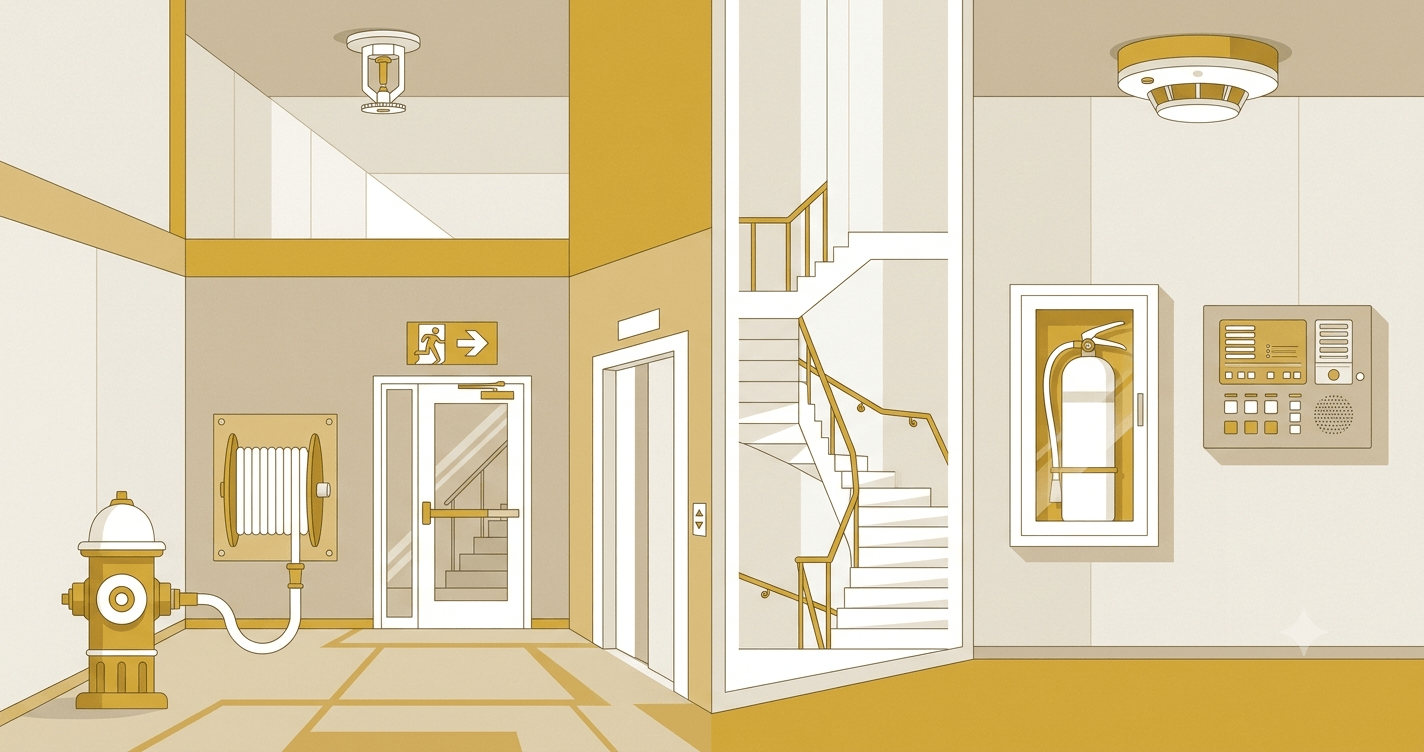
Mounting height, accessibility, and clear signage are non-negotiable compliance elements. Extinguishers must be mounted 100 to 150 centimeters from floor level, positioned along primary egress routes, and protected from weather elements. High-visibility cabinets with reflective markings ensure rapid location during emergencies.
Leading Brand Comparison Table
| Brand | Product Type | UAE Availability | Certifications | Pricing Tier | Key Strengths |
|---|---|---|---|---|---|
| Minimax | Dry Powder, Foam, CO2 | Widely available | CE, ISO 11601 | Mid-range | Robust construction, excellent performance records |
| Tyco/Kidde | Multi-type range | Excellent distribution | UL, CE, ISO certified | Mid to Premium | Comprehensive product range, strong technical support |
| Desautel | Dry Powder, Water, Foam | Regional availability | ISO 11601, NFPA | Budget-friendly | Cost-effective, suitable for high-volume requirements |
| Angus Fire | Foam, Dry Powder, Wet Chemical | Limited UAE presence | ISO, NFPA, FM Approved | Premium | Specialized products, superior performance certifications |
| Gloria | Water, Foam, Dry Powder | Moderate availability | CE, ISO 11601 | Budget to Mid-range | Reliability, European engineering standards |
Recommendations by Facility Type
Office Buildings and Workplaces: ABC multipurpose dry powder extinguishers (6kg to 9kg capacity) positioned every 15 meters along corridors and near electrical panels. Complement with CO2 extinguishers in server rooms and telecommunications areas. Minimum annual servicing required under UAE regulations.
Commercial Kitchens and Hospitality: Wet chemical extinguishers (Type K) mounted directly above or adjacent to cooking appliances are mandatory. Support with ABC dry powder units for general fire protection. Training on wet chemical operation is essential for kitchen staff, as improper use can worsen oil fires.
Retail and Storage Facilities: Water-based extinguishers for general stock combined with foam extinguishers if flammable products are stored. High-capacity units (9kg to 12kg) ensure adequate suppression capability for larger commodity fires. Ensure clear access and compliance with commodity stacking height restrictions.
Industrial and Manufacturing Plants: Comprehensive risk assessment determines the specific combination. Facilities handling petroleum products require foam extinguishers; electrical equipment areas need CO2 units; general manufacturing benefits from multipurpose dry powder. Integration with fixed suppression systems (sprinklers, foam systems) optimizes layered protection.
Residential Units and Villas: A single 2kg ABC multipurpose extinguisher strategically placed in the kitchen provides essential protection. While not a substitute for evacuation and emergency services, residential extinguishers enable occupants to suppress small fires before they become unmanageable, particularly in villa kitchens where cooking fires represent the primary residential hazard.
Maintenance and Compliance Requirements
UAE fire safety regulations mandate monthly visual inspections confirming proper pressure readings, visible damage, and accessibility. Annual professional servicing by certified technicians ensures extinguisher integrity and agent quality. Every five years, hydrostatic testing validates pressure vessel safety. Facilities must maintain detailed maintenance logs, readily available for Civil Defense inspections.
Selection of reputable brands with established UAE service networks ensures ongoing compliance and reliability. Minimax, Tyco/Kidde, and Desautel maintain robust support infrastructure with trained technicians throughout emirates.
Browse our SafePass store or use the compliance calculator.