Choosing the right fire-resistant cable is one of the most important — and most misunderstood — decisions in a fire-alarm or emergency-systems installation in the UAE. Pick a cable that under-performs and the whole life-safety circuit can fail during a fire and fail Civil Defence inspection. This guide explains the grades, sizes and standards so you can specify with confidence.
What a fire-resistant cable actually does
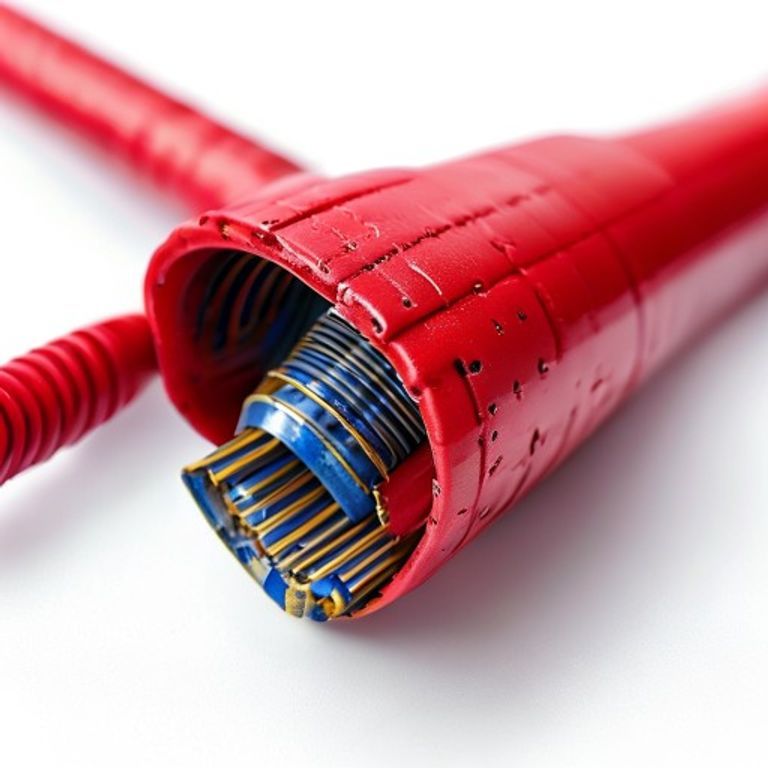
A fire-resistant (fire-rated) cable is built to keep its circuit alive while it is burning. When fire reaches ordinary cable, the insulation melts and the circuit dies. A fire-rated cable maintains "circuit integrity" for a defined time, so fire alarm panels, sounders, voice-evacuation speakers, emergency lighting and sprinkler-pump controls keep operating long enough for people to escape. That is why Abu Dhabi Civil Defence (ADCDA) mandates fire-rated cabling on every compliant project.
FP200 vs BS 6387 Category "C": the key difference
The single most important choice is the fire-survival grade. Two levels dominate the UAE market:
| Feature | FP200-equivalent (standard grade) | BS 6387 Category "C" (enhanced) |
|---|---|---|
| Fire survival | ~30 minutes | 3 hours at 950°C |
| Best for | Standard fire-alarm detection wiring in villas, shops, small offices | High-rise, hospitals, malls, critical and long-duration evacuation routes |
| Example product | Ducab Flambicc 2A | Firex Fire-Rated Cable (Cat C) |
Rule of thumb: use standard grade for routine detection loops, and step up to Category "C" when the building is large, high-occupancy, or the escape strategy depends on systems running for hours — not minutes.
Which conductor size? 1.0, 1.5 or 2.5 mm²
Size is about current-carrying capacity and voltage drop over distance, not fire performance:
- 1.0 mm² — short detection loops and light circuits.
- 1.5 mm² — the everyday standard for most fire-alarm detection and interconnect wiring. This is what the majority of projects specify. See Ducab 1.5mm² (100m) or the 500m roll for larger jobs.
- 2.5 mm² — sounder and powered-device circuits, or long cable runs where voltage drop matters. See Ducab 2.5mm² (100m).
When in doubt, 1.5 mm² covers most detection wiring; move to 2.5 mm² for sounders, powered devices and long runs.
Standards to look for
- BS 5839-1 — the design and installation standard for fire-detection and alarm systems.
- BS 6387 / BS EN 50200 / IEC 60331 — the fire-survival (circuit-integrity) tests that define the grade.
- LSZH (Low Smoke Zero Halogen) — the sheath should emit minimal smoke and no toxic halogen gas, protecting escape routes and electronics.
- Voltage 300/500V — the standard rating for fire-alarm and emergency circuits.
Always confirm the cable is UAE Civil Defence approved and that the datasheet states the fire rating, so your consultant and the inspector can sign off without delay.
A quick decision checklist
- Small/standard building, routine detection → FP200-equivalent, 1.5 mm².
- High-rise / hospital / mall / critical evacuation → BS 6387 Cat C.
- Sounder or powered circuits, long runs → step up to 2.5 mm².
- Always: LSZH sheath, 300/500V, Civil Defence approved, documented fire rating.
Still unsure? Browse every certified option on the fire alarm systems & cables page, or send your bill of quantities and our team will match the right grade and size and quote same-day.