A fire-detection system is only as good as the detectors you choose for each space. Put a smoke detector in a dusty kitchen and you get false alarms; use a single point detector in a warehouse atrium and the fire grows before it is sensed. This guide explains every detector type, where each belongs, and the standards that apply in the UAE.
Detector types and where they belong
| Detector | Best for | Avoid |
|---|---|---|
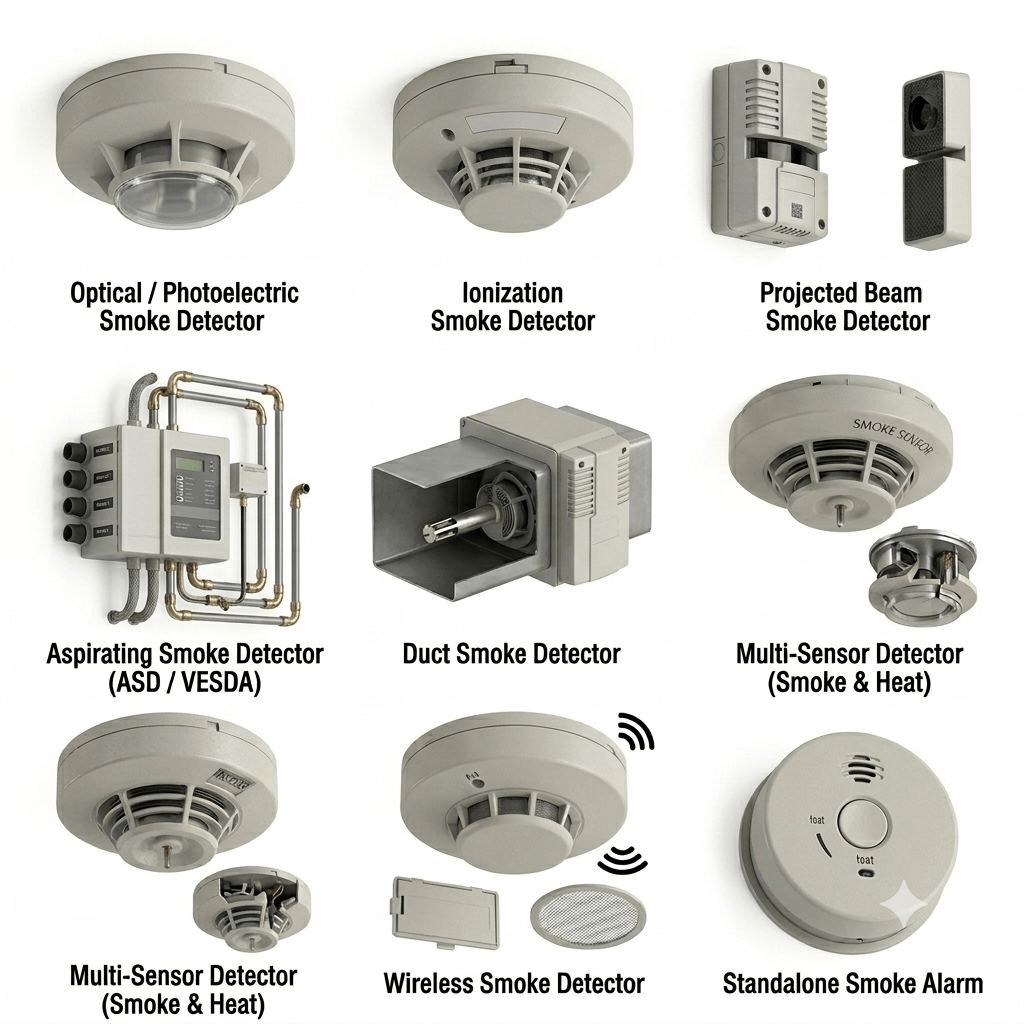
| Optical (photoelectric) smoke | Offices, bedrooms, corridors, escape routes | Kitchens, dusty/steamy areas |
| Heat | Kitchens, plant rooms, dusty/dirty spaces | Rooms needing early warning |
| Beam | Warehouses, atria, halls, high ceilings | Small compartmented rooms |
| Gas | LPG stores, car parks, boiler rooms | General smoke detection |
Optical smoke detectors respond fast to smouldering fires — see the Apollo XP95 addressable, Bosch FAP-O 420, or the conventional System Sensor 2W-B. Where smoke detectors would false-alarm, fit a heat detector. For large open volumes, a Fireray 5000 beam or Hochiki SPC-24 covers long distances from a single pair. For gas risks use a Honeywell BW or Crowcon LPG detector.
Addressable vs conventional
- Addressable — each detector reports its own location to the panel; ideal for medium-to-large buildings where fast, precise fire location matters (e.g. the Apollo XP95 protocol).
- Conventional — detectors are grouped into zones; cost-effective for small buildings such as villas and small shops.
Standards to look for
- EN 54-7 — smoke detectors; EN 54-5 — heat; EN 54-12 — beam.
- BS 5839-1 — system design, detector spacing and coverage.
- Confirm UAE Civil Defence approval and compatibility with your control panel.