The Real Compliance Challenge
Industrial factory owners in ICAD, Abu Dhabi face a critical reality: fire safety compliance is not optional, and delays cost money—sometimes six figures before a single production line runs. In my two decades with Civil Defense, I've watched facility managers underestimate three core truths. First, ICAD falls under multiple regulatory jurisdictions simultaneously, and conflicting interpretations between agencies can halt projects for months. Second, most owners begin fire safety planning only after submitting their initial building permit—a costly mistake that forces retroactive redesigns. Third, the technical standards themselves have evolved significantly, and facilities complying with 2015 codes may not meet current NFPA 101 and UAE Fire and Life Safety Code standards.
The consequence? Facility owners commonly face inspection failures at the critical final stages, pushing opening dates back 3–6 months and incurring rework costs between AED 200,000 and AED 500,000. In worst cases, incomplete fire safety documentation has resulted in denial of occupancy permits and operational shutdowns lasting weeks.
Key Government Entities and Their Exact Roles
Understanding which agency makes which decision is essential—and often misunderstood.
Abu Dhabi Civil Defence Authority (ADCDA)
ADCDA is the primary fire safety regulator for industrial facilities in ICAD. They issue the Fire Safety Certificate (FSC), which is legally mandatory before occupancy. ADCDA conducts technical inspections based on UAE Fire and Life Safety Code and NFPA standards. They approve fire suppression designs, detection systems, emergency lighting, and evacuation routes. Expect their approval timeline to be 4–8 weeks from submission of complete technical drawings.
Abu Dhabi Department of Designations (ADDED)
ADDED approves land use classification and issues the Land Use Permit. For ICAD industrial zones, ADDED confirms that your intended factory operation aligns with designated industrial use. This step typically takes 1–2 weeks but is often overlooked, leading to later objections from ADCDA. Do not skip this step.
Hassantuk (Integrated Centre for Government Services)
Hassantuk processes building permits and coordinates between ADCDA, ADDED, and the Abu Dhabi Municipality. They do not make technical decisions but ensure all agencies review documents in sequence. Processing here adds 2–3 weeks. Incomplete submissions at Hassantuk are returned without review—common cause of project delays.
Abu Dhabi Municipality
The Municipality approves architectural and structural plans, building materials, and occupancy capacity. They coordinate with ADCDA on shared site inspection. Their approval timeline is typically 3–5 weeks, running parallel with ADCDA review.
Step-by-Step Process from Start to Occupancy License
Stage 1: Pre-Design Consultation (Week 1–2) – Cost: AED 5,000–10,000
Engage a NEBOSH-certified fire safety consultant immediately. Provide them your factory floor plan, equipment types, chemical inventory, and worker count. The consultant submits a Fire Safety Brief to ADCDA to confirm alignment before full design investment. This prevents costly rejections later. Timeline: 1–2 weeks. Many owners skip this; doing so doubles downstream revision costs.
Stage 2: Land Use Permit Application (Week 3–4) – Cost: AED 2,000
Submit your factory operation description to ADDED with a letter from your consultant confirming industrial zoning compatibility. Approval is usually automatic but legally non-negotiable. Processing: 1–2 weeks.
Stage 3: Detailed Fire Safety Design (Week 5–12) – Cost: AED 25,000–50,000
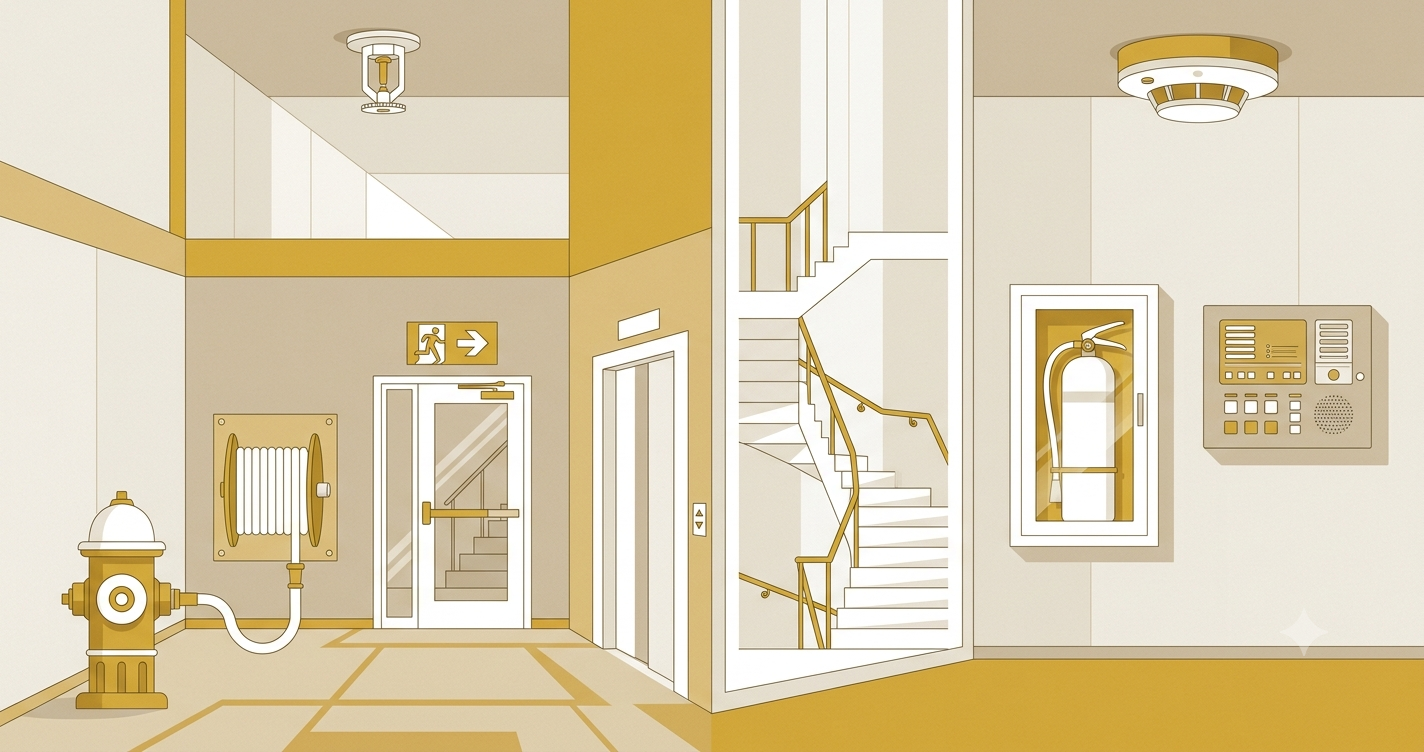
Your consultant and structural engineer produce detailed drawings including:
- Fire detection and alarm systems (manual and automatic)
- Suppression systems (sprinklers, foam, CO₂, or dry chemical per risk category)
- Emergency lighting and exit signage
- Evacuation routes and assembly points
- Fire-rated doors and compartmentation
- Hydrant and water supply calculations
All drawings must reference UAE Fire Code Article 3 and relevant NFPA standards (NFPA 13 for sprinklers, NFPA 72 for alarms, NFPA 101 for life safety). Timeline: 6–8 weeks for industrial facilities of 5,000+ m².
Stage 4: Building Permit and ADCDA Submission (Week 13–16) – Cost: AED 8,000–12,000
Submit complete technical package to Hassantuk, including architectural plans, fire safety designs, and Land Use Permit approval letter. ADCDA and Municipality review in parallel. Typical turnaround: 3–4 weeks. Incomplete submissions are rejected and restarted—budget extra 2 weeks if revisions are needed.
Stage 5: ADCDA Technical Inspection (Week 17–20) – Cost: Included in FSC fee (AED 3,000–5,000)
ADCDA conducts a detailed site inspection of all fire systems before they are fully commissioned. They verify sprinkler head placement, alarm testing, emergency exit dimensions, and water supply adequacy. Inspectors often identify minor deviations; budget 1–2 weeks for corrective actions. This step cannot be rushed.
Stage 6: System Commissioning and Testing (Week 21–24) – Cost: AED 15,000–25,000
All fire systems are tested and certified by licensed technicians. Sprinkler flow tests, alarm sensitivity checks, backup power verification, and evacuation drills are documented. ADCDA requires signed test certificates from approved contractors. Timeline: 2–3 weeks depending on system complexity.
Stage 7: Final Approval and Fire Safety Certificate (Week 25–28) – Cost: AED 3,000–5,000
ADCDA issues the Fire Safety Certificate (valid 2 years). Occupancy License is then released by Abu Dhabi Municipality. Total project timeline: 6–7 months for a typical industrial facility.
Technical Fire Safety Requirements for Industrial Factories
Detection Systems
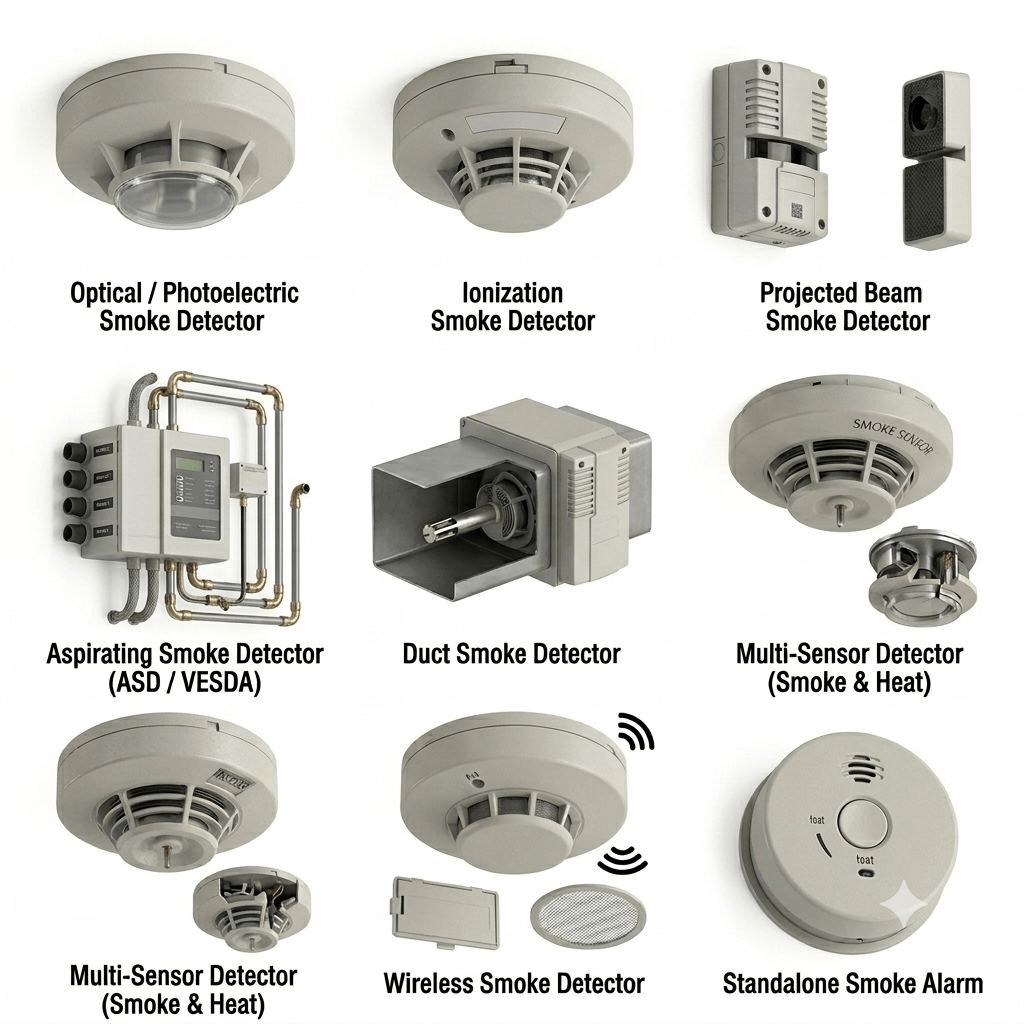
Factories in ICAD must have automatic fire detection covering all occupied areas, storage zones, and high-hazard equipment spaces. Ionization detectors are required in production areas; photoelectric detectors in storage. Manual pull stations must be positioned within 25 meters of every exit. All systems must integrate with a certified Fire Alarm Control Panel (FACP) compliant with NFPA 72.
Suppression Systems
Suppression type depends on fire risk classification:
- Low hazard (assembly, offices): Wet-pipe or dry-pipe sprinkler systems per NFPA 13, minimum K-factor 5.6 (standard pendent heads), designed for 18 m²/head coverage.
- Ordinary hazard (general manufacturing): Wet-pipe systems with K-factor 8.0, 12 m²/head coverage, and in-rack sprinklers if storage exceeds 7.5 meters high.
- High hazard (chemical processing, flammable liquids): Pre-action or deluge systems, often combined with foam or dry chemical suppression. Water supply must be from dual sources (town mains + dedicated tank), with minimum 2-hour duration.
Water supply for sprinkler systems must meet UAE Code demand: domestic demand + sprinkler demand + 30% safety margin. For a 10,000 m² factory, typical storage is 500–750 m³ in elevated or ground tanks, costing AED 150,000–250,000.
Evacuation and Life Safety
Exit corridors must be minimum 1.5 meters wide (1.8 meters for factories over 500 workers). Travel distance to exit must not exceed 45 meters (normal areas) or 30 meters (high-hazard zones). All emergency exit doors must open outward (panic hardware required). Emergency lighting must operate for minimum 3 hours from backup battery, with lux levels of 50 lx at floor level. Signage must be in Arabic and English, 150 mm lettering minimum.
Compartmentation and Fire Ratings
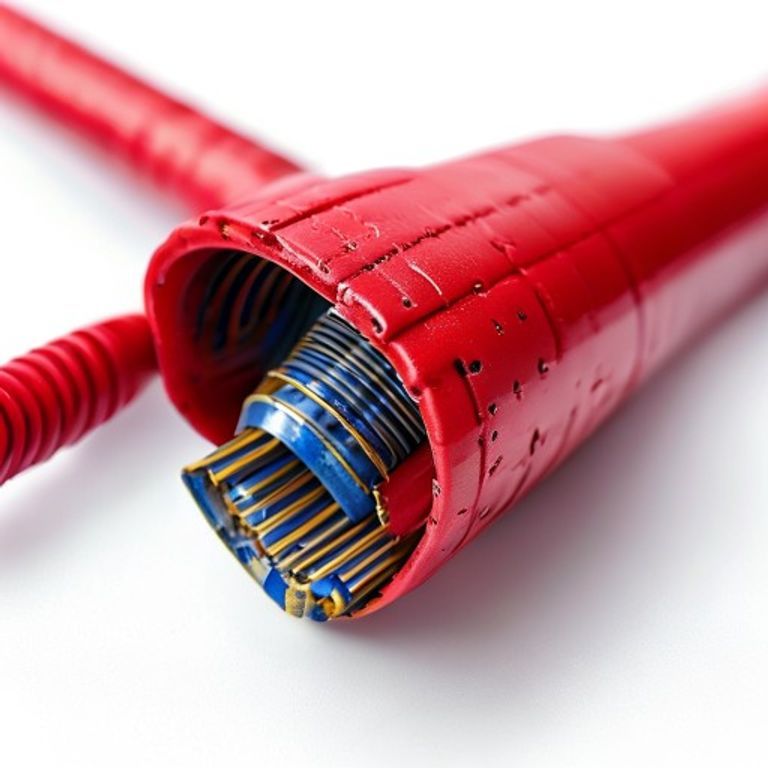
Factories must be subdivided into fire compartments not exceeding 2,500 m² each (ICAD industrial standard). Fire-rated doors between compartments must be rated to match wall rating (typically 60 or 90 minutes for industrial). Vertical shafts (electrical, mechanical) must be enclosed with 90-minute fire-rated construction. Cable trays carrying power and control wiring must be physically separated or protected with 60-minute fire-rated cable covers.
Common Costly Mistakes
Mistake 1: Underestimating Water Supply Requirements
The problem: Owners rely on municipal water supply alone. During summer or peak demand, pressure drops below sprinkler system needs (3.5 bar minimum). Result: System fails inspection.
Financial impact: Retrofitting dedicated water tanks (500+ m³) costs AED 200,000–300,000 and delays project 6–8 weeks.
Prevention: Engage a hydraulics engineer in Stage 1 to calculate supply demand. Budget for dual-source water systems upfront.
Mistake 2: Fire-Rated Door Installation Errors
The problem: Contractors install fire-rated frames without proper seals or gap tolerances. ADCDA inspectors reject doors that do